ID
ID  EN
EN  FR
FR  ES
ES  JA
JA  KO
KO  PT
PT  ZH
ZH  AR
AR  FA
FA  RU
RU  NL
NL  MS
MS  VI
VI  PH
PH  TH
TH 

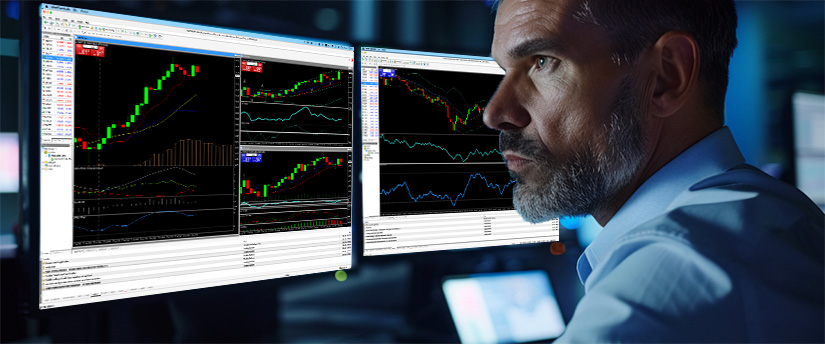
A currency strength meter helps forex traders identify which currencies are performing best at any given moment.
These tools analyse multiple currency pairs simultaneously to show you the relative strength of each major currency.
Understanding how to use this tool can transform your trading approach from guessing to making informed decisions.
What is a Currency Strength Meter?
A currency strength meter measures how well one currency performs against others in real-time. Think of it as a scoreboard that ranks currencies from strongest to weakest.
The tool calculates strength by comparing a currency’s performance across all major pairs. If the USD rises against EUR, GBP, dan JPY simultaneously, it will show USD as strong. This gives you a broader view than watching individual pairs.
Most meters display results on a scale from 0 to 100. A reading above 70 typically indicates strong currency performance. Readings below 30 suggest weakness. The middle range shows neutral or consolidating currencies.
How a Currency Strength Meter Works
The calculation process starts with gathering data from multiple currency pairs.
It looks at recent price movements, typically over the past hour to 24 hours.
Advanced meters use mathematical algorithms to weight each currency’s performance. They consider factors like:
- Trading volume in each pair
- Price momentum and direction
- Volatility levels across timeframes
- Recent breakouts or reversals
The system then assigns scores to each currency. These scores update continuously as new price data arrives. Some platforms refresh every minute, while others update in real-time.
Your trading platform determines which currencies appear in the meter.
Most focus on the eight major currencies: USD, EUR, GBP, JPY, CHF, CAD, AUD, and NZD.
Reading Currency Strength Meter Signals
Strong currencies appear at the top of the meter with high numerical values. Weak currencies sit at the bottom with low scores. The key lies in identifying the gap between strong and weak currencies.
How to Identify Strong and Weak Currency Pairs
Look for currencies at opposite ends of the spectrum. A currency showing 85 strength paired against one showing 15 creates ideal trading conditions. This wide spread suggests clear directional momentum.
Avoid currencies clustered in the middle range. When all currencies show similar strength levels between 40-60, the market often lacks clear direction. These conditions lead to choppy, sideways price action.
Using a Currency Strength Meter for Trend Confirmation
Pay attention to rapid changes in currency strength meter rankings. A currency jumping from weak to strong within hours signals potential trend shifts. Quick reversals often precede major price movements.
Best Trading Strategies Using a Currency Meter Strength
The divergence strategy works well for beginners using currency meter strength analysis. Find the strongest and weakest currencies, then trade the pair that combines them. If AUD shows maximum strength and JPY shows maximum weakness, consider buying AUD/JPY.
Combining Currency Meter Strength Signals with Technical Analysis
Correlation trading takes advantage of currency relationships. When two currencies move in opposite directions on the meter, look for pairs that reflect this divergence. Strong USD and weak EUR suggest USD/EUR buying opportunities.
Trend continuation becomes easier with meter confirmation. If a currency pair trends upward and the base currency shows increasing strength while the quote currency weakens, the trend likely continues.
Range trading benefits from neutral meter readings. When currencies cluster around 50 on the meter, pairs often trade sideways. Use this information to sell resistance and buy support levels.
Common Mistakes When Using a Currency Strength Meter
Relying solely on the tool creates problems. It provides one piece of the puzzle, not the complete picture. Always combine meter readings with technical analysis, news events, and market sentiment.
Avoid Over-Reliance on Currency Meter Strength Signals
Ignoring timeframes leads to conflicting signals. A currency might show strength on the hourly meter but weakness on the daily meter. Match your trading timeframe with the appropriate meter setting.
Chasing extreme readings often results in losses. When a currency reaches maximum strength, it may be due for a reversal rather than continued gains. Look for confirmation from other indicators before entering trades.
Over-trading happens when every meter signal triggers a trade. Strong signals require confirmation from multiple sources. Wait for clear setups rather than acting on every small meter movement.

Choosing the Right Currency Strength Meter Tool
Free online meters provide basic functionality for beginners. These tools show current strength rankings and basic historical data. They work well for learning how currencies interact.
Professional trading platforms offer advanced meter features. These platforms integrate meter data with charting and order entry.
Mobile apps let you monitor currency strength meter anywhere. Look for apps that update frequently and send notifications when currencies reach extreme levels. This keeps you informed even away from your trading desk.
Consider meters that include exotic currencies if you trade beyond major pairs. Some tools cover over 20 currencies, giving you more trading opportunities in emerging market currencies.
Integrating a Forex Strength Meter into Your Trading Plan
Start by setting specific criteria for trades. Decide minimum strength differences before considering a trade. Many traders use a 30-point gap as their threshold for potential setups.
Create alerts for extreme meter readings. Set notifications when currencies reach the 80+ or 20- levels. This prevents you from missing significant strength shifts during the trading day.
Document meter readings in your trading journal. Record the currency strength meter levels when you enter and exit trades. This data helps you identify which meter conditions produce the best results.
Combine meter analysis with your existing strategy. If you trade breakouts, use the meter to confirm which currency pairs show the strongest momentum. This improves your trade selection process.
Currency strength meter analysis becomes more valuable as you gain experience reading the signals. Start with paper trading to practice interpreting meter data without risking capital.
Focus on major currency pairs initially, then expand to other currencies as your confidence grows. The meter serves as a powerful tool for understanding market dynamics and improving your trading decisions over time.
Disclaimer: This information is not considered as investment advice or an investment recommendation, but instead a marketing communication. IronFX is not responsible for any data or information provided by third parties referenced, or hyperlinked, in this communication.