RU
RU  EN
EN  FR
FR  ES
ES  JA
JA  KO
KO  PT
PT  ZH
ZH  AR
AR  FA
FA  NL
NL  MS
MS  VI
VI  PH
PH  TH
TH  ID
ID 


What is a commodity in economics is the single most important question you need to answer if you want to move beyond basic stock trading and unlock the power of global macro trends.
While most retail investors spend their time tracking the quarterly earnings reports of tech giants or trying to guess the next viral meme coin, institutional players look at the world differently. They look at the foundational materials that build our cities, feed our populations, and fuel our transport systems.
Every single day, trillions of dollars flow through markets driven entirely by raw, unbranded goods. From the crude oil that fuels global transit to the coffee beans that power your morning, these foundational resources are the hidden gears of the financial world.
As a premier brokerage platform, we are here to demystify this high-opportunity asset class so you can trade with absolute confidence.
Defining the Core Concept: Why Branding is Irrelevant
To truly wrap your head around what is a commodity in economics, you must first understand a concept known as fungibility. In everyday consumer markets, branding is everything. If you go to buy a smartphone, an iPhone is vastly different from a Samsung device.
The corporate logo, the software ecosystem, and the design aesthetic create a unique value proposition that allows companies to charge premium prices.
In the raw materials market, however, this logic is completely flipped on its head. Gold is gold, whether it is extracted from a deep mine in Australia, a riverbed in Canada, or a refinery in Switzerland. A barrel of crude oil has the exact same commercial utility and chemical value regardless of which energy giant pumped it out of the ground or which nation sat on top of the reservoir.
When retail investors ask our desk team what is a commodity in economics, we explain that it refers to highly standardized raw materials whose quality parameters are dictated by global mercantile exchanges, not by individual corporate brands. This absolute uniformity allows you to trade contracts seamlessly across the globe.
Because a contract for December Wheat represents the exact same grade and weight whether you are buying it in Chicago, London, or Tokyo, you can execute trades on pure market data without ever worrying about product differentiation.

Exploring the Anatomy: Hard vs. Soft Resources
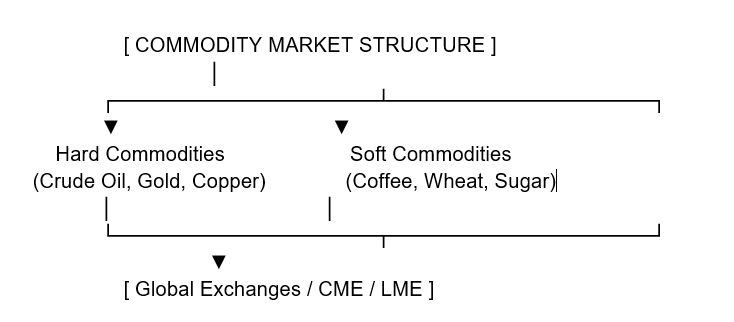
As you navigate our trading dashboard, you will quickly see that the market is split into two entirely distinct realms. Anyone learning what is a commodity in economics must master this binary division because the catalysts that move “hard” assets are completely different from those that disrupt “soft” assets:
1. Hard Commodities: The Industrial Backbone
These are non-renewable, finite resources that must be extracted directly from the earth’s crust or mined deep underground. This category forms the foundation of global industrial production and infrastructure development.
- Energy Assets: Crude oil (both Brent and WTI), natural gas, heating oil, and coal. These power our grids and transport networks.
- Base Metals: Copper, aluminum, zinc, nickel, and iron ore. These are the raw materials needed for electric vehicles, housing, construction, and electronics.
- Precious Metals: Золото, silver, platinum, and palladium. While they have industrial uses, they are primarily traded as safe-haven assets and stores of value.
2. Soft Commodities: The Lifeblood of Sustenance
These are renewable, agriculturally grown products or livestock that are harvested rather than mined. They are highly sensitive to natural cycles, ecological changes, and global logistics networks.
- Grains and Oilseeds: Wheat, corn, soybeans, and rice. These form the fundamental caloric baseline for the human population and animal feed.
- Tropical Exotics: Coffee, cocoa, sugar, and cotton. These are massive global cash crops traded across continents daily.
- Livestock: Live cattle, feeder cattle, and lean hogs, which are critical to tracking global food supply chains and dietary shifts.
Price Discovery: How Supply and Demand Rule the Charts
One of the most liberating aspects of discovering what is a commodity in economics is realizing the radical transparency of its pricing. There are no hidden corporate earnings reports to worry about, no sudden CEO scandals that sink a stock overnight, and no creative corporate accounting manipulations to parse through. Instead, raw material prices are driven by the ultimate, unshielded economic law: pure global supply and demand.
Let us look at a real-world example. When a severe drought hits the high-altitude growing regions of South America, the global supply of coffee beans plummets. Because millions of people around the world will still demand their morning espresso regardless of the weather, that drop in supply causes coffee prices to spike instantly on our charts.
Conversely, if global manufacturing slows down during an economic recession, factories stop ordering raw wiring and industrial parts. This causes the demand for industrial copper to surge downward, depressing its price.
Mastering the definition of what is a commodity in economics gives you the unique power to look at real-world news, like geopolitical tensions in the Middle East, unexpected weather patterns in the American Midwest, or international trade agreements, and directly translate that macroscopic data into strategic, highly targeted market positions.
What Is a Commodity in Economics? The Digital Frontier
The global marketplace is constantly shifting, and the definitions used by top brokerages are evolving alongside it. If you ask a veteran institutional trader today what is a commodity in economics, they will tell you that the modern list goes far beyond physical dirt, rocks, livestock, and grains.
In our hyper-connected digital age, entirely new intangible assets are qualifying for commodity status.
This is because they meet the exact criteria we discussed earlier: mass global demand, universal utility, and strict structural standardization. Today, advanced traders on our platform are actively speculating on assets that didn’t even exist a few decades ago:
- Global Internet Bandwidth: Data transmission capacity is bought, sold, and traded in standardized blocks to keep global telecommunications flowing.
- Carbon Emissions Credits: Environmental compliance offsets have turned the right to emit carbon dioxide into a strictly regulated, highly liquid financial asset.
- Cloud Computing Power: Server storage units and raw processing power (measured in standardized compute hours) are increasingly treated like any other utility.
The underlying economic laws governing these high-tech assets remain completely unchanged, but the instruments themselves have evolved to power the digital era.
The Mechanics of Commodity Trading: Futures, Options, and CFDs
For decades, trading these markets was a logistical nightmare reserved only for massive multinational corporations, commercial farmers, and industrial conglomerates. If you wanted to trade wheat, you literally had to worry about grain silos, shipping freight, and spoilage.
Fortunately, modern financial innovation has completely leveled the playing field. When you trade through our brokerage platform, you do not need to worry about taking delivery of a thousand barrels of oil outside your house. Instead, you trade financial derivatives that track the exact underlying price movements of these goods in real time:
- CFDs (Contracts for Difference): This is the most popular route for retail traders. A CFD allows you to speculate on whether a raw asset’s price will go up or down. If your prediction is correct, you pocket the price difference. You can easily go “long” (buy) if you think an asset will rise, or go “short” (sell) if you think it will fall.
- Futures Contracts: These are standardized legal agreements to buy or sell an asset at a predetermined price on a specific date in the future. They are highly regulated and provide incredible liquidity for short-term day traders and long-term position traders alike.
- Options Contracts: Options give you the right—but not the obligation—to buy or sell a specific market asset at a set price before a certain expiration date, offering unique ways to hedge risk or leverage small amounts of capital.
What Is a Commodity in Economics? Why You Should Trade
Now that you have pinned down what is a commodity in economics, it is time to look at the massive structural advantages this asset class brings to your active trading desk. Historically, these raw assets provide two massive benefits that every well-balanced portfolio needs to survive volatile market cycles: inflation protection and non-correlated diversification.
When central banks print money and fiat currencies lose their purchasing power, the value of paper money drops, but the value of real, physical goods like gold, oil, and agriculture tends to surge.
By adding these assets to your portfolio, you build a natural hedge against inflation. Furthermore, because these markets move based on supply lines and weather rather than corporate balance sheets, they often rise when the stock market is crashing.
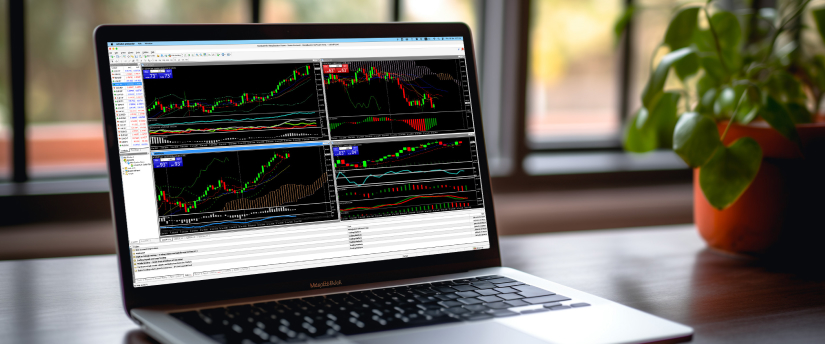
Through our high-speed, institutional-grade brokerage platform, you can access these global markets in just a few clicks. Using our advanced charting tools, ultra-low latency execution, and flexible leverage options, you can capitalize on micro-movements across global energies, металлы, and softs, all without ever needing to physically store a single ounce of copper or a single bushel of corn.

Summary: What is Commodity in Economics
In economics, a commodity is a standardized, interchangeable raw material or agricultural product traded on global markets based on supply and demand. Lacking individual branding, these assets are classified into hard resources like metals and soft goods like agricultural products.
Trading commodities, often through futures or CFDs, provides essential portfolio diversification and acts as a hedge against inflation. For more in-depth information, visit the Investopedia article on commodities.
DISCLAIMER: This information is not considered as investment advice or an investment recommendation, but is instead a marketing communication.